This striking tortoise is endemic to the island of Madagascar and its population is severely threatened in the wild, reaching the brink of extinction.
It is considered one of the most beautiful tortoises in the world.
Physical Features
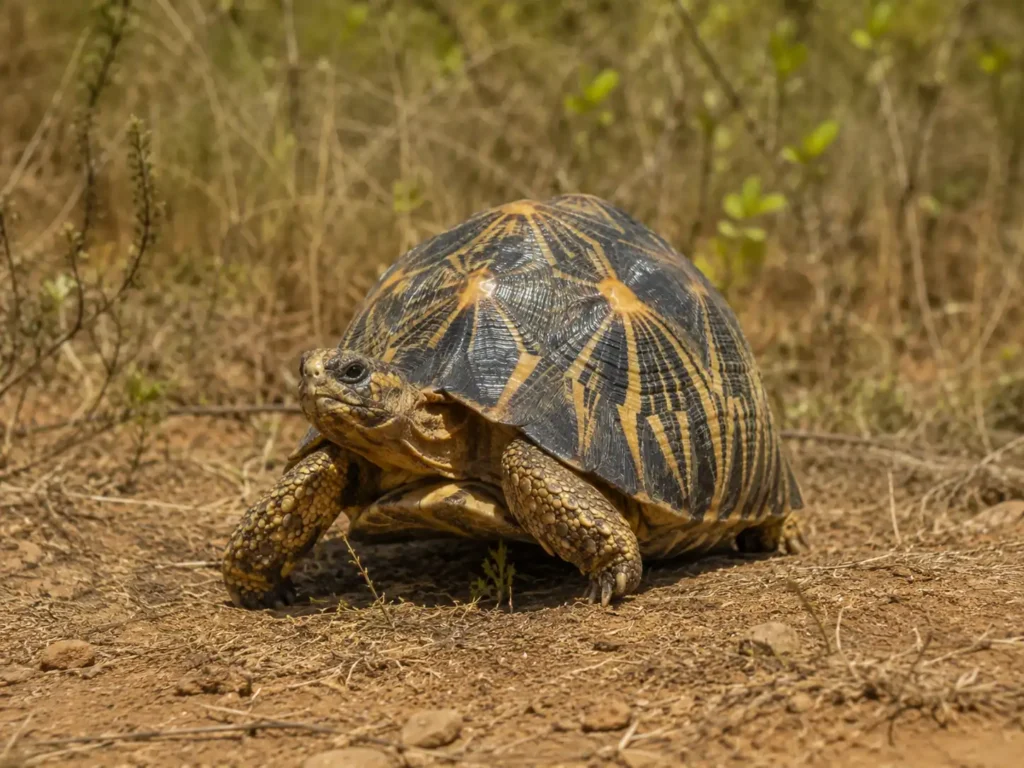
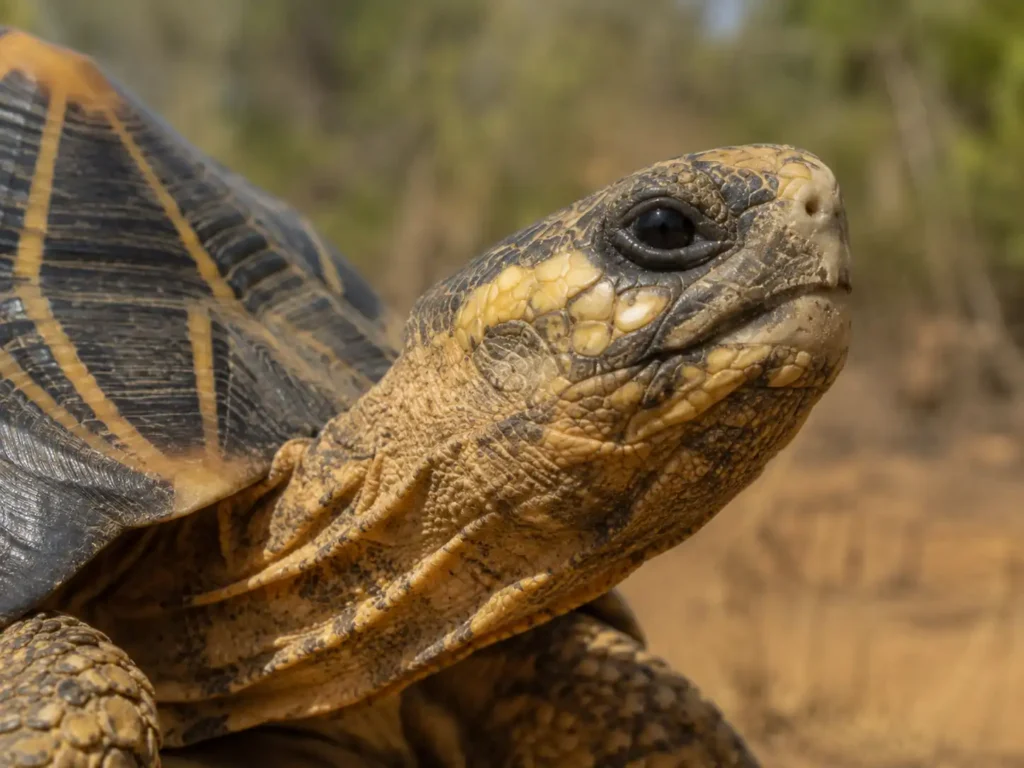
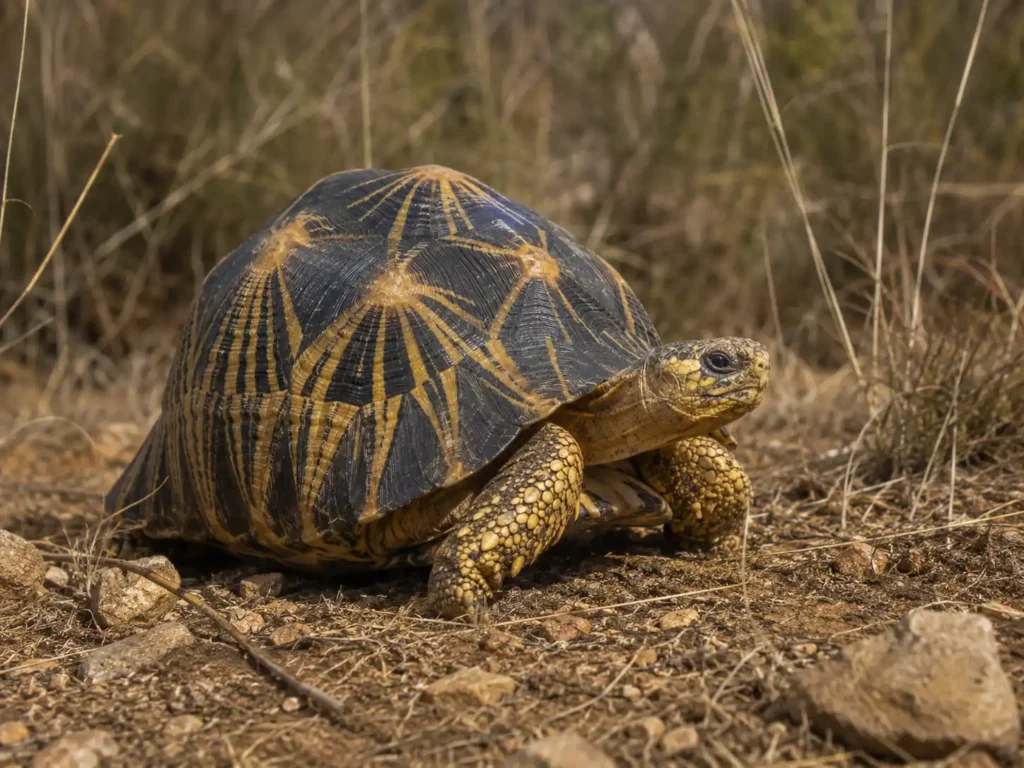
They have a dark green domed carapace with numerous yellow stripes in a characteristic star-shaped pattern that gives them their name.
Like many other tortoise species, they have a very long life expectancy and can live to be over 100 years old. As they grow older, their sexual dimorphism becomes increasingly marked, with males differing in size and weight, as well as a wider tail and more marked notches than females.
Males reach up to 20kg, females around 15kg, with lengths of around 40cm and 30cm respectively.
Habitat
It is native to Madagascar, where the largest population is found, although it can also be seen in Mauritius and Reunion Island, where it was introduced by man.
It prefers arid areas with thorny plants such as those of the Opuntia genus, although it can be found from wooded areas to sand dunes near the coast.
Diet
Its diet is strictly herbivorous, based on plants, mainly green leaves and, to a lesser extent, fruits and seeds.
Reproduction
They reach sexual maturity when they are about 25cm in size and females can lay up to 3 clutches per season with between 1 and 5 eggs each. These eggs hatch after an incubation period of between 145 and 230 days.
The young, which are lighter in colour than the adults, measure between 1.5 and 4 cm at the time of hatching.
Threats
This species of turtle is under enormous threat due to the small habitat that remains which has not been affected by deforestation and occupied by and, above all, by poaching, as these animals have a high commercial value on the black market.
Status and conservation
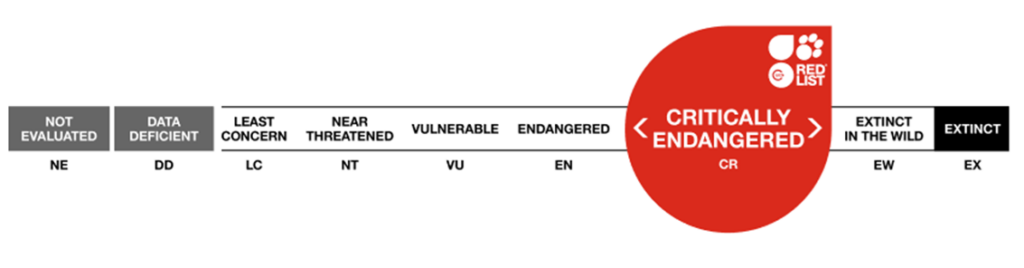
This species is found in the wild in very small numbers and for this reason it is listed as “Critically Endangered” on the IUCN Red List and is protected by the CITES Convention to the highest degree, listed in Annex I of the Convention.