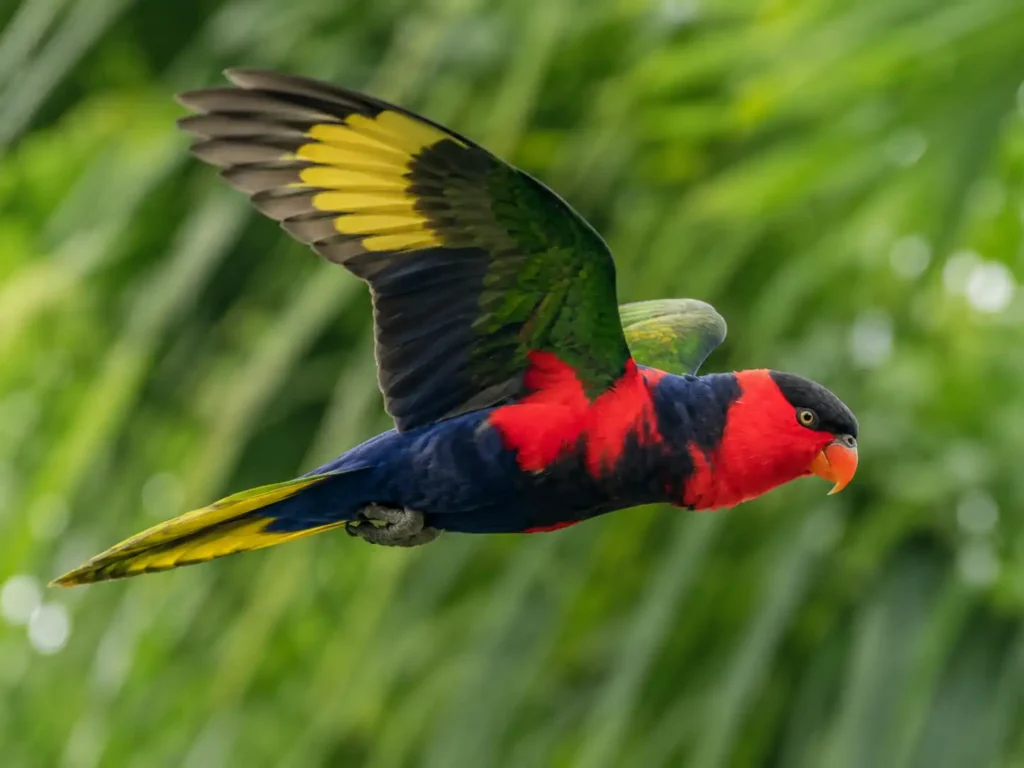
These birds are native to Papua New Guinea.
Physical Features
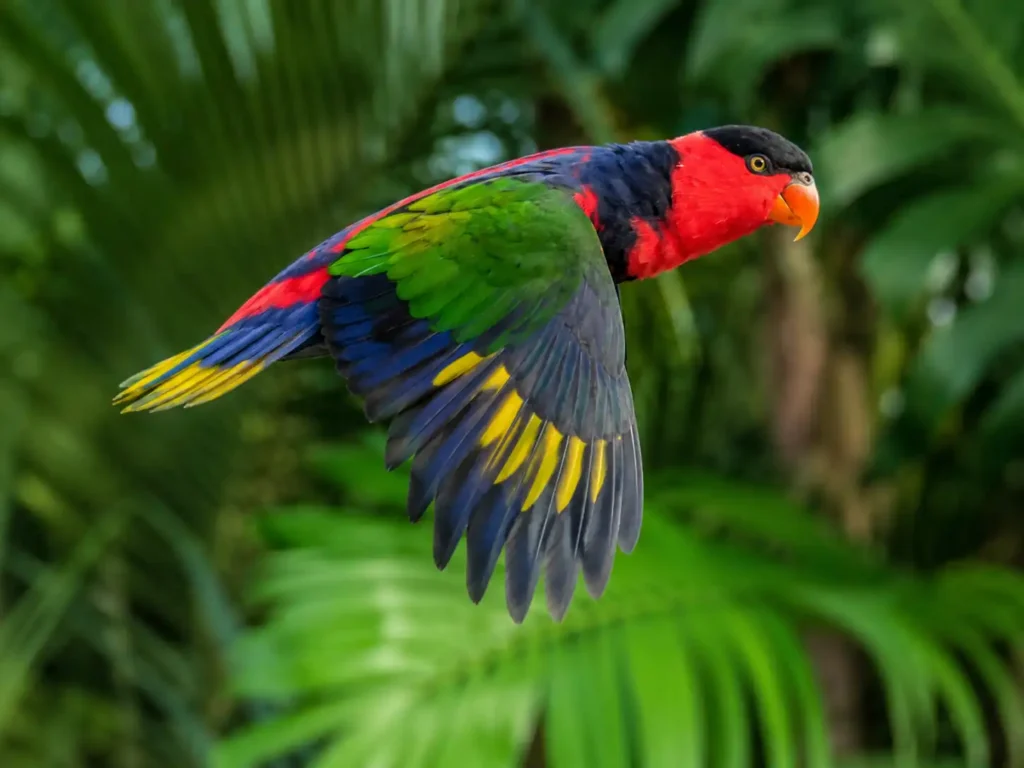
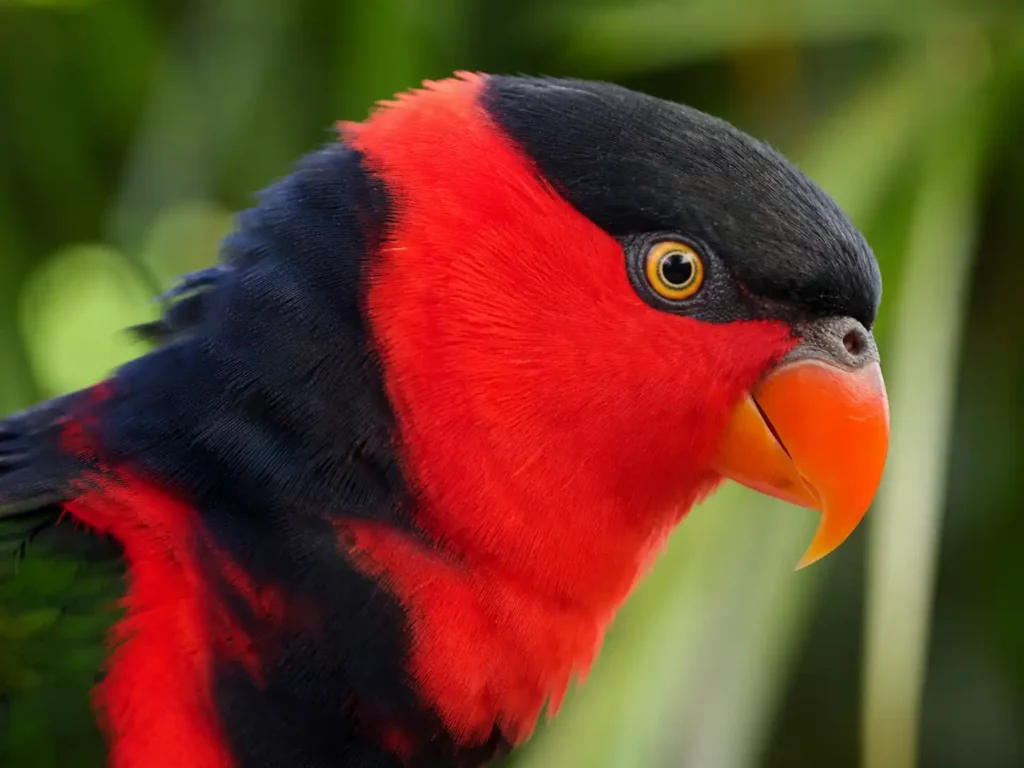
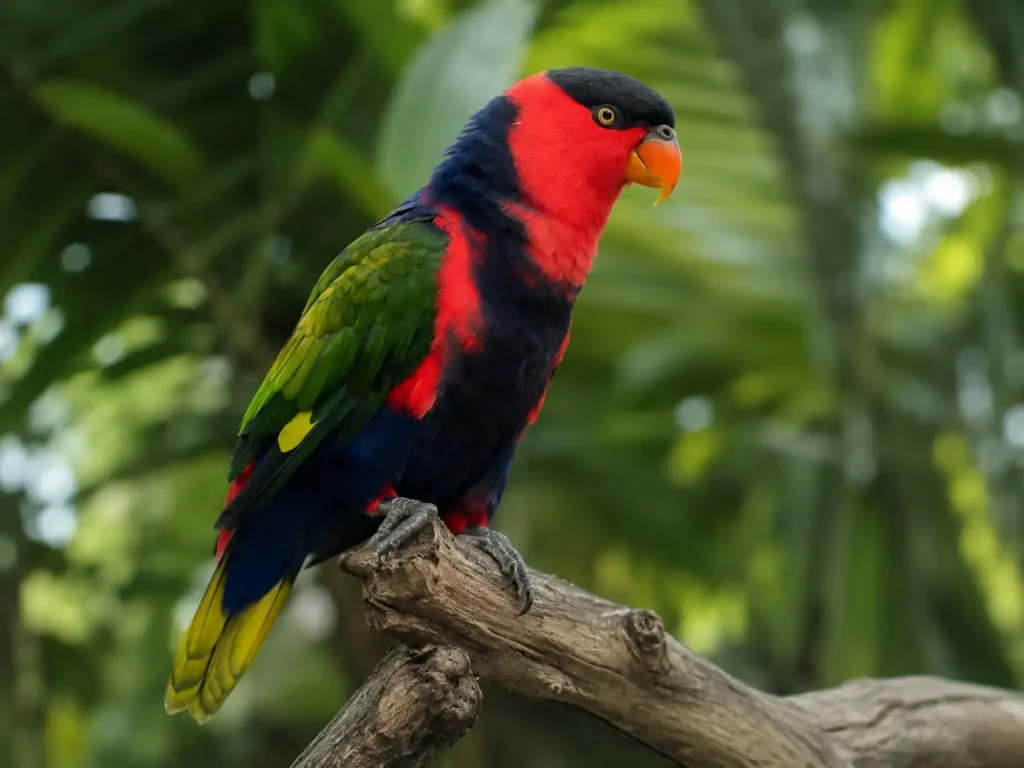
They have a colourful plumage with red tones on the face, throat and under the wings, which contrasts with the black of the head and the green of the back of the wings. In certain areas of the abdomen and neck we can see purplish tones.
They are around 30 cm long and weigh 200-250 grams, making them one of the most robust lorises.
Habitat
They inhabit tropical rainforests and lowland forests up to 1000 metres in altitude, in some regions of Indonesia and mainly Papua New Guinea.
Diet
They feed mainly on pollen and nectar, as their tongues are specially adapted to this type of diet, although they also eat fruit such as apples, grapes and pears. In captivity, it is very common to see them eating nectar from the hands of their keepers, as it is possible to gain their trust in a short period of time.
Reproduction
They use the hollows of trees to make their nest. These nests are provided with a bed of wood chips, bark, etc., deposited by both parents.
The clutches usually consist of 2 to 3 eggs, which are incubated for a period of 26 days until hatching. After this period, they raise the chicks for 10-14 weeks.
Behaviour
These animals live and travel in pairs, although groups of up to 10 individuals can sometimes be found.
Threats
Habitat destruction due to urban encroachment and capture for the illegal exotic species market are the main threats to these birds.
Status and conservation
Its population, although widespread over a large territory, is considered to be in decline. It is therefore listed in Appendix II of the CITES Convention.
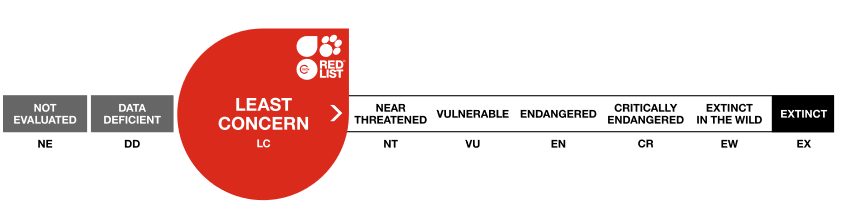
Classified as Least Concern (LC) on the IUCN Red List.