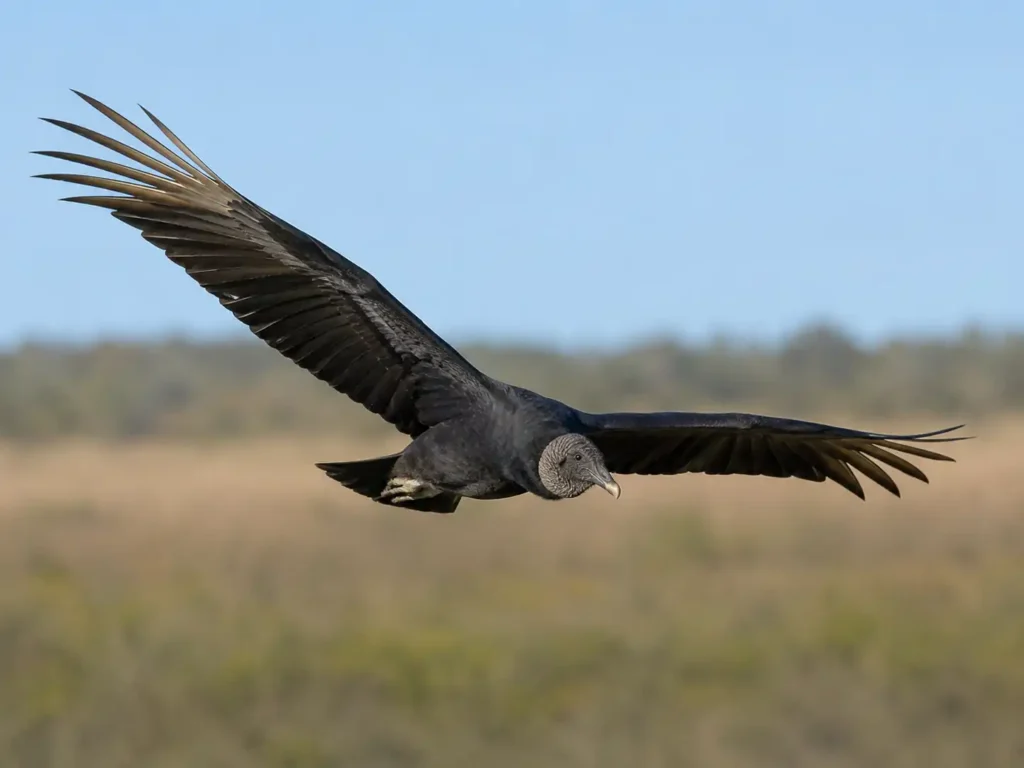
Also known as black vulture, black-headed vulture, Mexican vulture, among others.
Características morfológicas
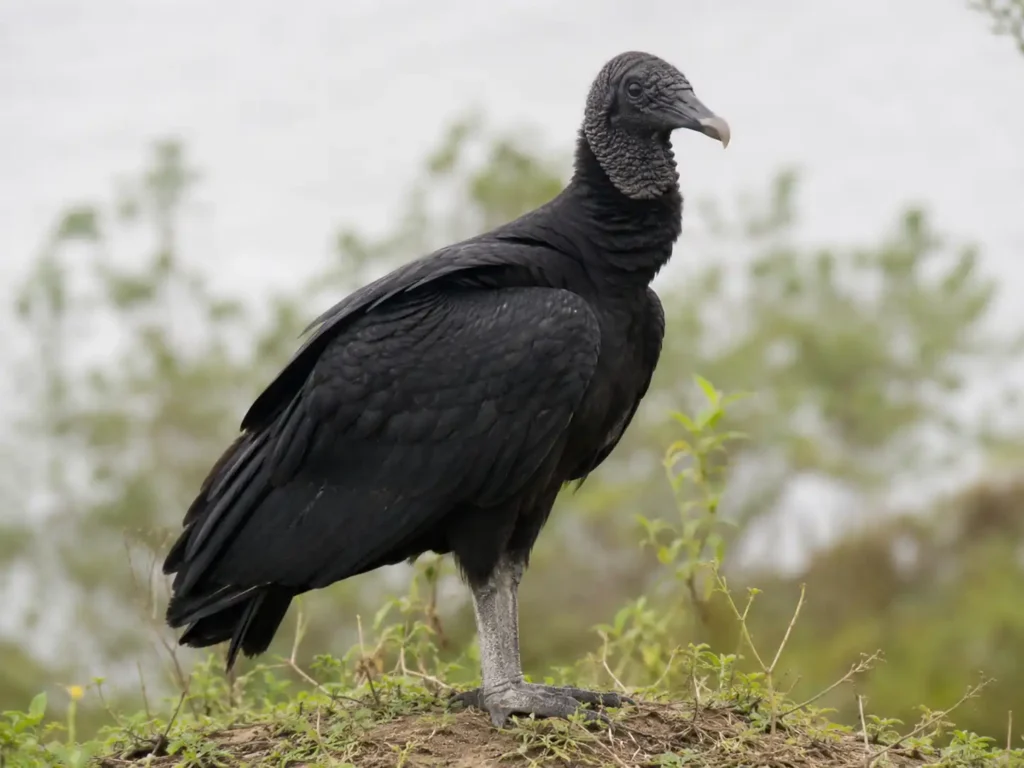
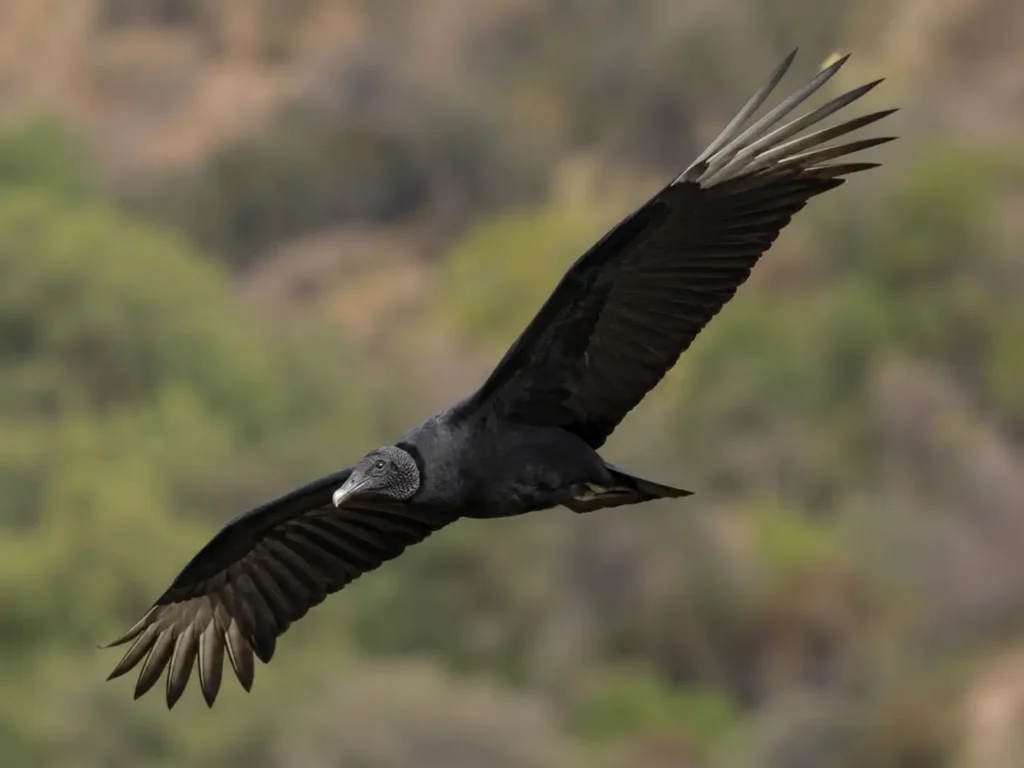
The American black vulture is a carrion bird, it measures 74 cm in length and has a wingspan of 1.67 m, the average weight is 2 kg for males and 2.75 kg for females.
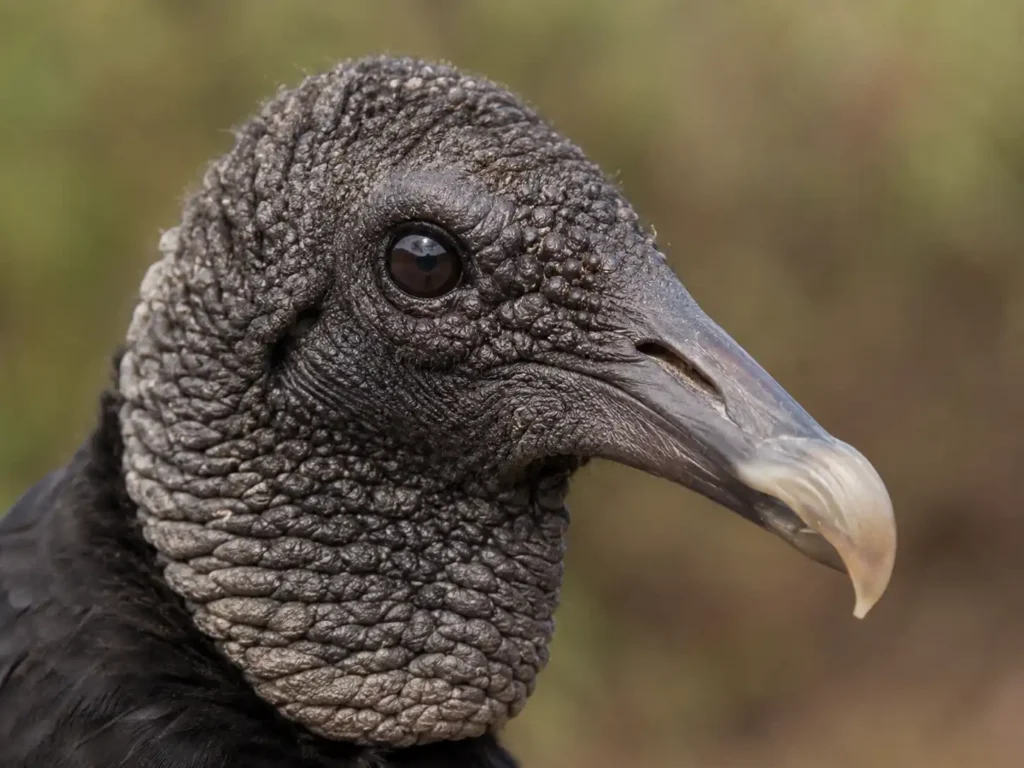
It has no feathers on its head and neck, its skin is wrinkled and gray, and its plumage is black. It has a short, hooked beak.
This bird is characterized by lacking a syrinx, the vocal organ of birds, so it only produces low-frequency grunts or hisses.
Habitat
It mainly inhabits the southern United States, Mexico, Central America and most of South America.
It can be found in humid lowland forests, shrublands in grasslands, marshes and wetlands, and degraded old-growth forests. It is usually seen soaring or perched on posts or dead trees.
Feeding
This is a scavenger species. In areas populated by humans, it may scavenge in garbage dumps. It eats eggs and decaying plant material, and is capable of killing or injuring newborn or incapacitated mammals. Like other vultures, they play a vital role in the ecosystem by cleaning the environment through the consumption of carcasses and organic waste, thus preventing the spread of disease.
Reproduction
It lays its eggs in wooded areas, always close to the ground, in hollow trees or other hiding places. It usually lays between 1 and 3 eggs.
Both parents incubate the eggs for 28-41 days. The chicks remain in the nest for 2 months.
Threats
Currently, there are no numerous threats to this species; however, this species is considered a threat by livestock farmers due to predation on newborns.
Status and conservation
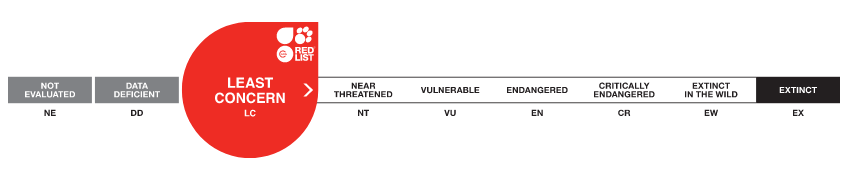
It is listed as a species of Least Concern on the IUCN Red List. Its population appears to be stable and has not reached the threshold for inclusion as a threatened species.