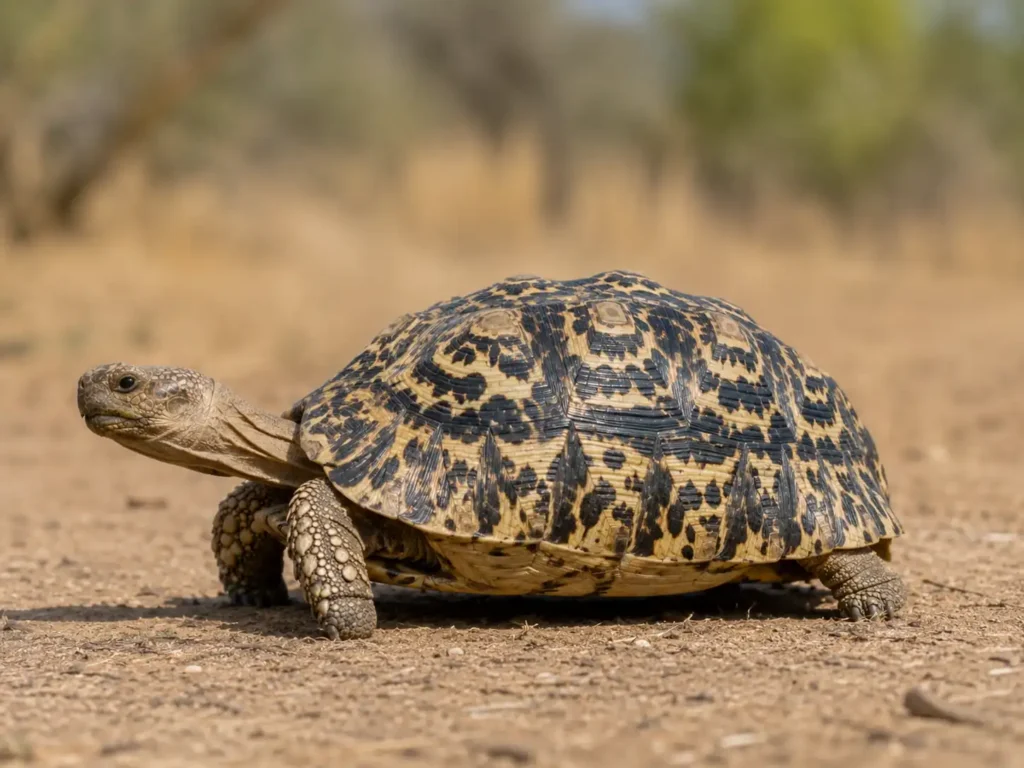
It is the fourth largest turtle in the world. Although the average size is not that large, specimens up to 100cm in length have been recorded in countries such as Somalia and Ethiopia.
Physical Features
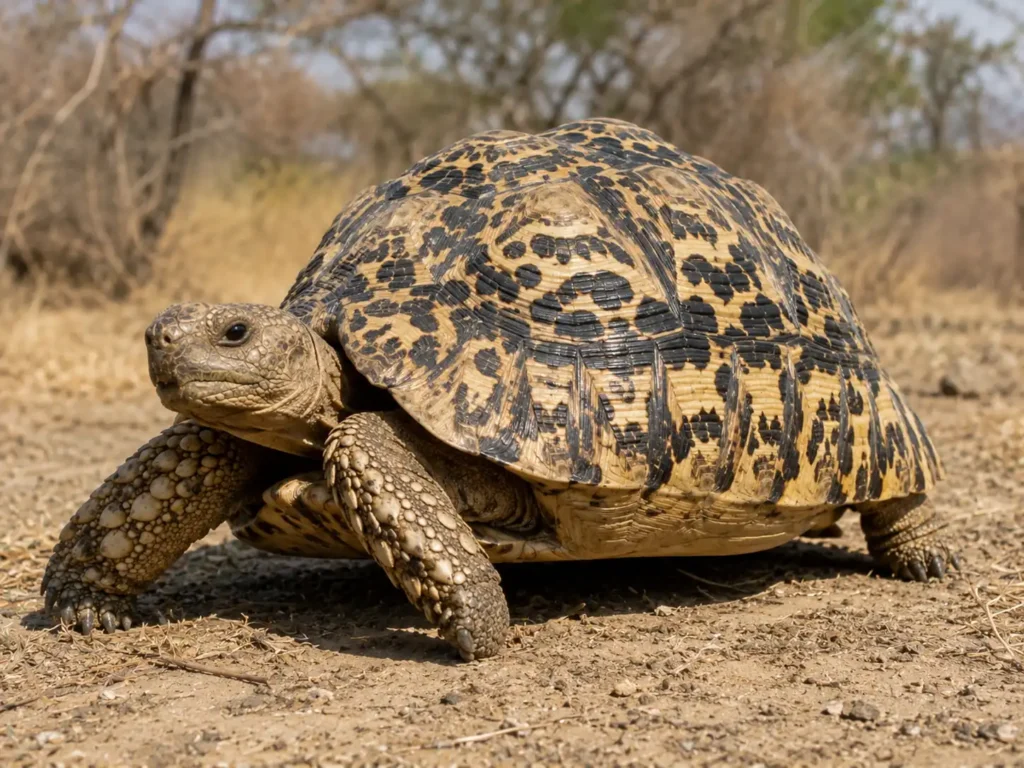
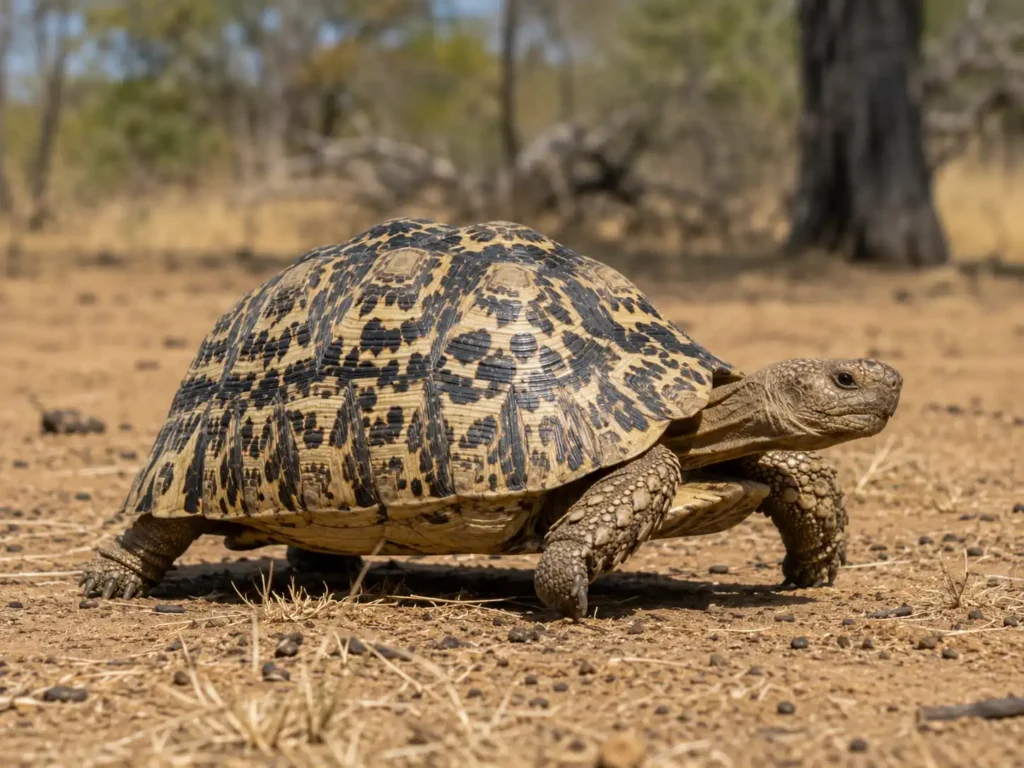
This species of turtle is called the leopard tortoise because of its light-coloured carapace with black spots. Their shells are very convex and their growth shields are clearly distinguishable.
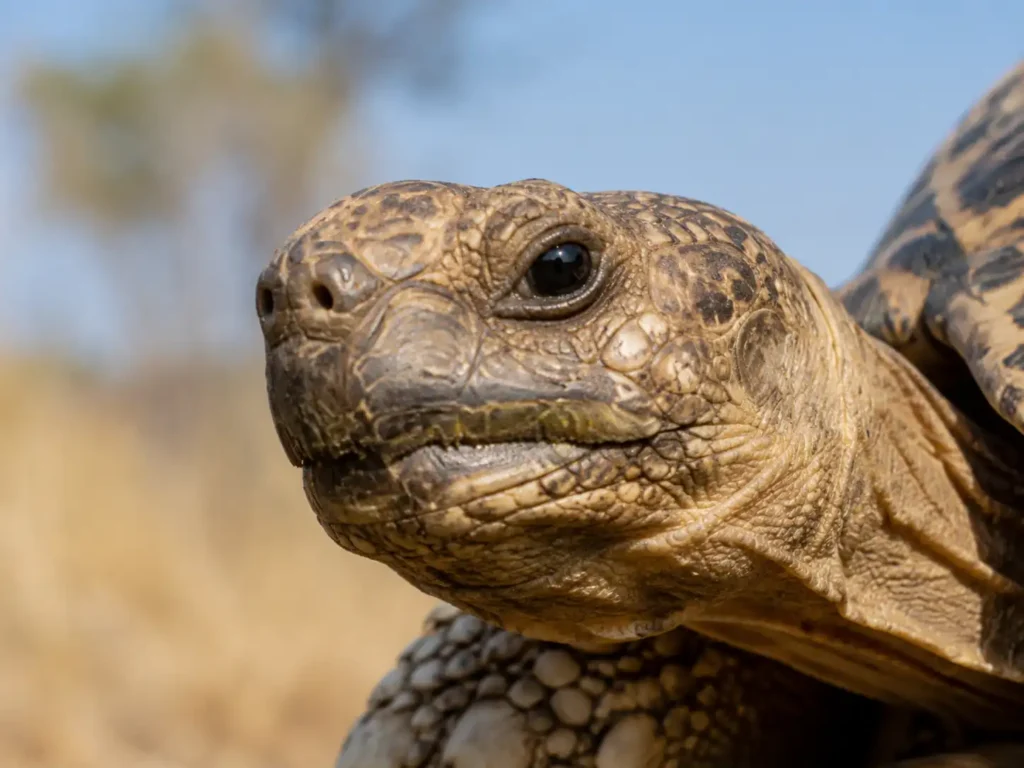
Both head and legs are light brown, a colouring that facilitates camouflage in their African savannah habitat.
Their size varies according to the regions of origin and genetic lines, since the average length of males is around 40cm, and can reach up to 100cm in the largest specimens, with weights of around 40kg in these extreme cases.
The main characteristics that differentiate the sexes are that males have a more concave underside (plastron) than females and also have a slightly larger tail
Hábitat
It has a wide distribution on the African continent with specimens from the sub-Saharan region to practically all countries as far as South Africa.
They prefer hot, arid areas with shrub and herbaceous vegetation.
They can be found from altitudes of more than 200 metres to sea level.
Diet
Its diet is strictly herbivorous, based on thorny plants, clover, alfalfa, dandelion etc. Fruits and vegetables play a secondary role in the diet of this species.
Their diet must be based on a high fibre content, which they need for proper digestion.
Reproduction
They reach sexual maturity at a very advanced age compared to other species, between 12 and 15 years in the wild, but on the other hand it is a very long-lived species and therefore has many years to reproduce.
Females lay an average of 10 to 15 eggs, with a maximum of 30. These eggs hatch after an incubation period of between 130 and 180 days.
Threats
This species of turtle suffers, as is usual in this type of wild animal, a strong pressure from habitat destruction, due to deforestation, livestock farming, trafficking of exotic species as pets, etc.
Status and conservation
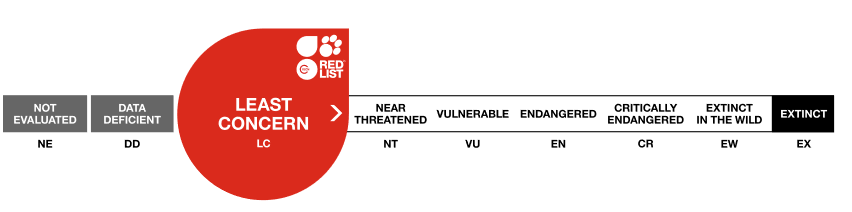
The species is found in the wild in very small numbers and for this reason it is listed in the IUCN Red List as “Least Concern” and is protected by the CITES Convention, listed in Annex II of the Convention.