
The Florida pond turtle or red-eared slider (Trachemys scripta elegans) is a subspecies of Trachemys scripta. It is therefore a water turtle.
It is on the list of the most harmful invasive alien species.
Physical features
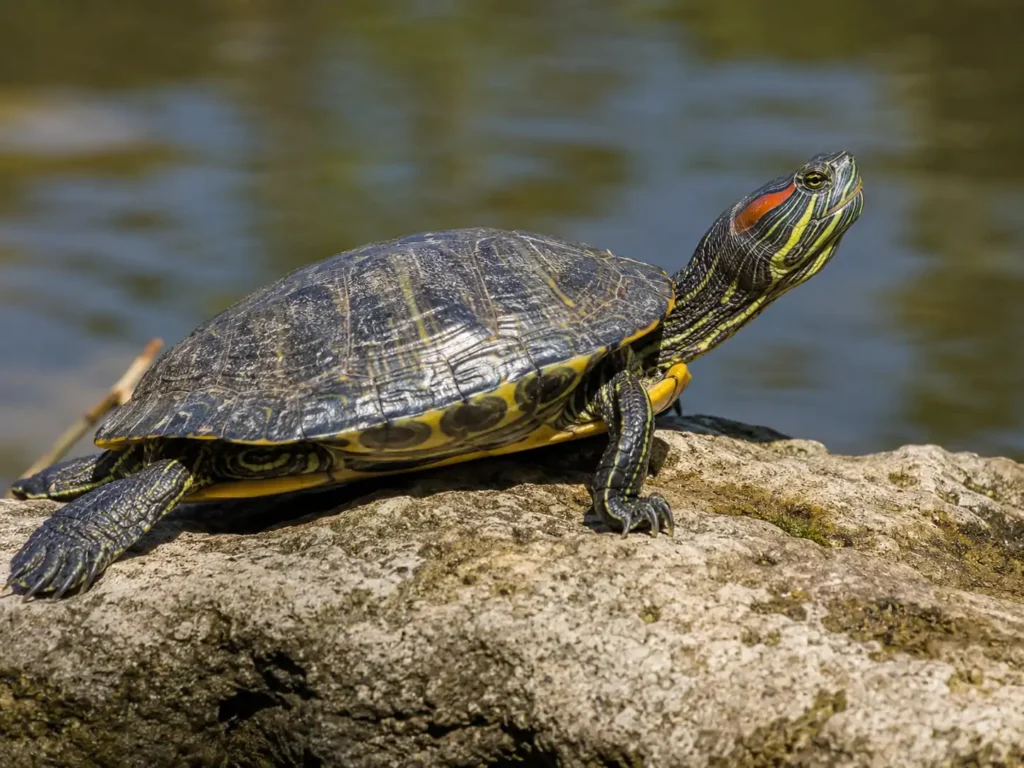
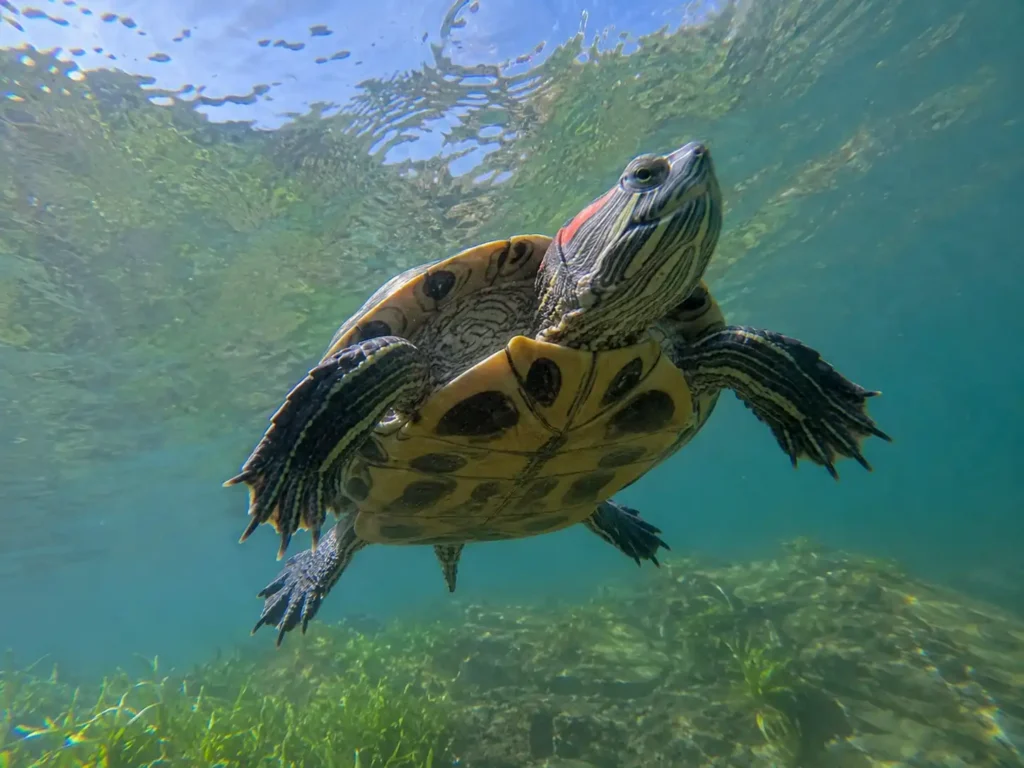
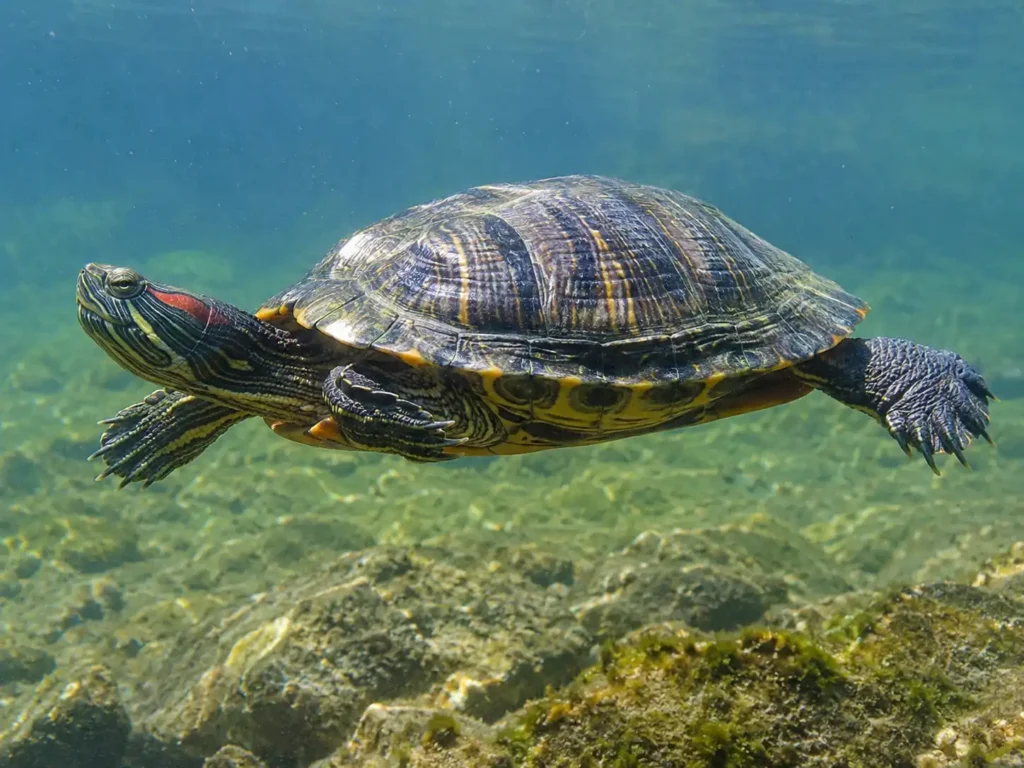
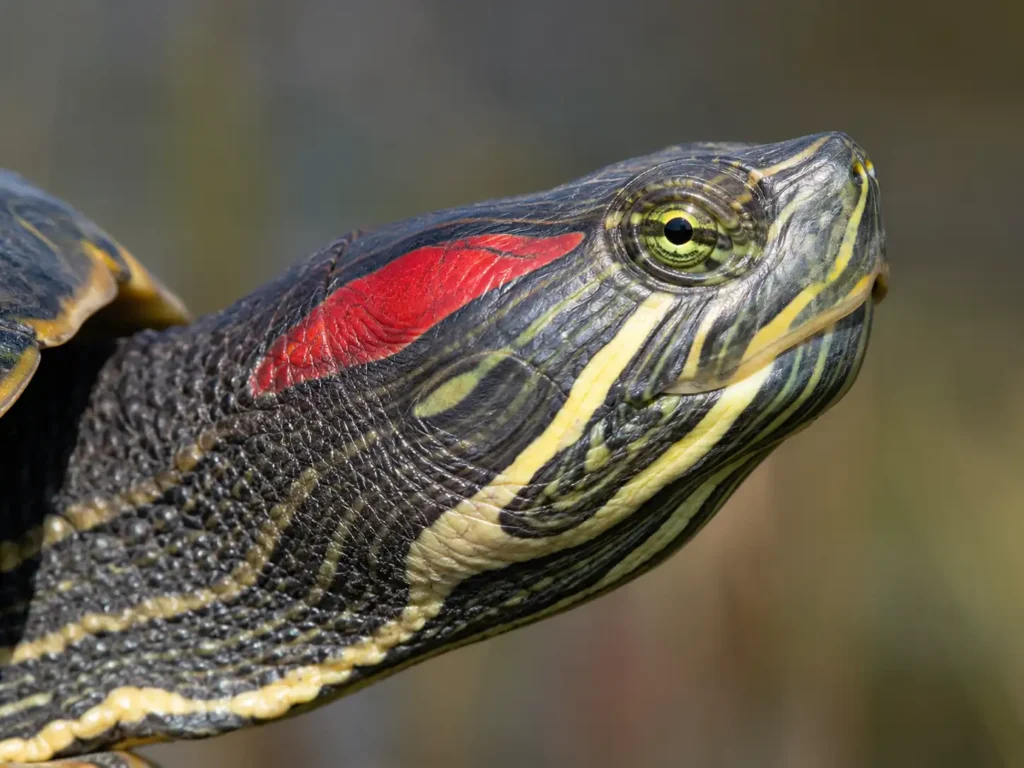
The carapace is rather flat, of green and brown tones with yellow stripes or spots, the length of the carapace of an adult tortoise can be from 12 to 35 cm, the snout and chin have yellow longitudinal lines. Typical of this tortoise are the reddish temples that give it its name. Males are usually smaller than females and have a long, thick tail.
Habitat
They are found in warm climates, particularly in the south-eastern region of the United States. This area stretches from south-eastern Colorado to Virginia and Florida. They naturally inhabit areas where there is a source of still, warm water. These aquatic areas can be ponds, lakes, swamps, creeks, streams or rivers with slow currents. These turtles are also known to emerge from the water to rest on large rocks or logs, basking in the sunlight.
Diet
These animals are omnivorous, eating shrimps, snails, tadpoles, small fish, aquatic plants such as water lilies as well as roots and tubers.
Reproduction
The Florida tortoise usually has two mating periods. It is an oviparous species, so the females dig nests to lay their eggs. Clutches have between 4 and 25 eggs and incubation usually lasts between two and two and a half months. If the eggs are incubated at temperatures between 22° and 27° Celsius, they will develop into all-male clutches, whereas if they are incubated at higher temperatures, they will hatch into females.
Threats
The Florida turtles face almost no threats – in fact, they are a threat to many of the native species because they have been released into the wild without any control.
Protection Level